

Hello Xiaomi Fans!
Xiaomi is expanding its work in audio artificial intelligence with the release of MiDashengLM-Spatial, an open-source model designed to understand not only what a sound is, but also where it comes from and how it moves through an environment.
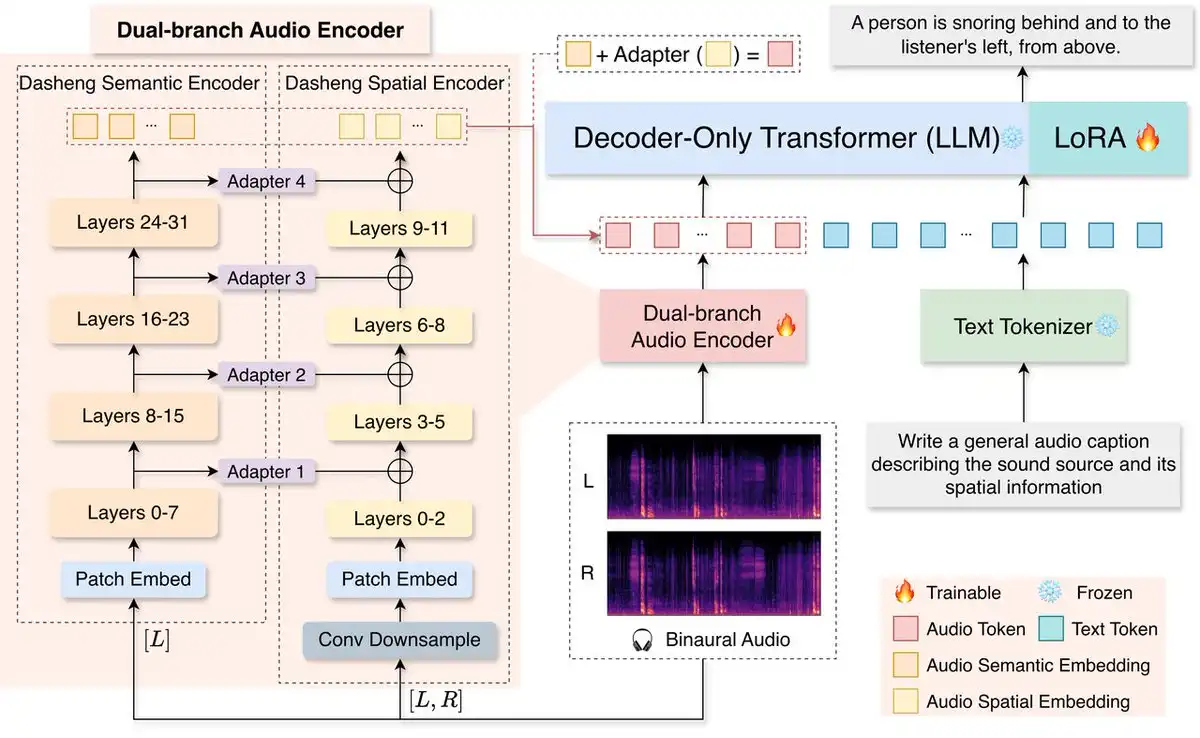
Announced by Xiaomi Tech, the new model builds on MiDashengLM-7B and introduces spatial awareness into general audio understanding. This allows AI to go beyond identifying speech, music or environmental sounds and begin reasoning about the acoustic scene surrounding them.
Traditional audio understanding models can identify sounds and describe what they hear, but understanding the location of a sound source presents an additional challenge. For example, recognising a dog barking is one task; determining whether the bark comes from the left or right, or distinguishing overlapping sounds from different directions, requires spatial information.
MiDashengLM-Spatial is designed to address this challenge through binaural audio perception, helping the model interpret directional cues and understand more complex acoustic environments.
A Dual-Branch Architecture
The model uses a dual-branch audio architecture to process two complementary types of information:
- Semantic understanding: Identifies and interprets the content of sounds, including speech, music and environmental audio.
- Spatial understanding: Focuses on sound-source location, directional information and relationships between sounds within a scene.
These branches work together so the model can use its understanding of sound content to support spatial perception and reasoning. Xiaomi’s approach aims to add spatial awareness while retaining the general audio-understanding capabilities of the original model.
Built For Complex Acoustic Environments
Xiaomi also highlights scene-level spatial data synthesis as an important part of the project. This helps provide training examples that combine different sounds with information about their positions and relationships in an acoustic scene.
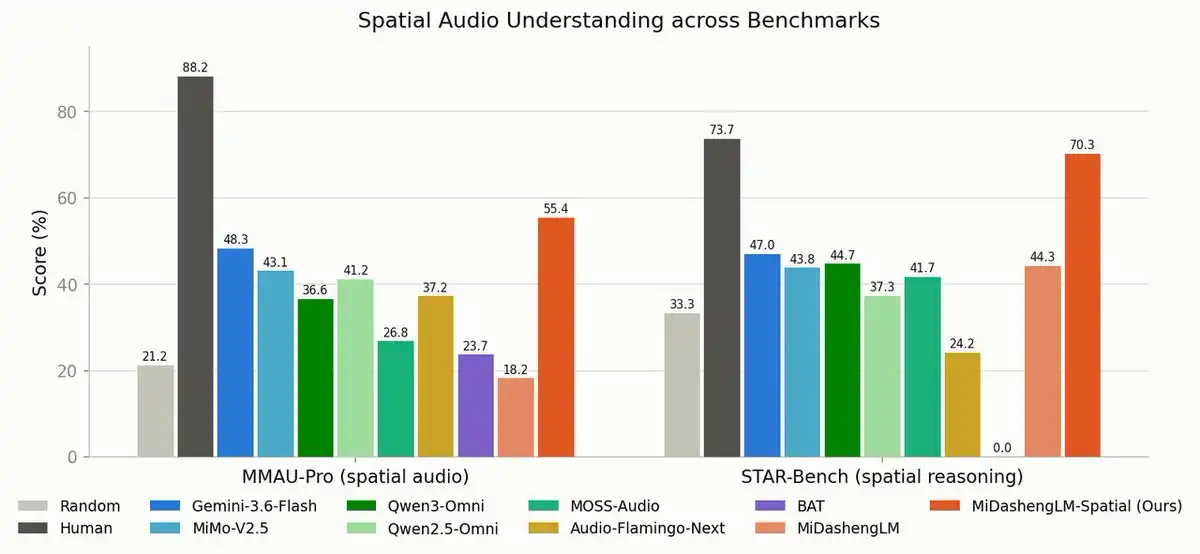
Potential applications include analysing overlapping sounds, identifying where events occur in a recording and answering questions that require an understanding of the surrounding sound environment. These are research capabilities rather than a claim that every application is already available in a consumer product.
By open-sourcing MiDashengLM-Spatial, Xiaomi is making the project available for developers and researchers to explore, evaluate and build upon. The project repository includes its technical overview, model usage instructions and evaluation resources.
You can explore the project and its demonstration here:
🔗 Demo and project overview: link
🔗 Source code and technical details: link
This release highlights an important direction in audio AI: moving from simply recognising sounds towards understanding the spatial relationships that shape a real-world listening experience.
Source: Xiaomi Tech on X; Xiaomi Research project documentation.

David Nata5 nap ezelőtt
👍
♥ 0
XiaomiFans2025112764715 nap ezelőtt
😀😌😲🫢✌️
♥ 0
XiaomiFans201708316066 nap ezelőtt
👍🏼
♥ 0